The flowering gardens of the Sanctuary Estate
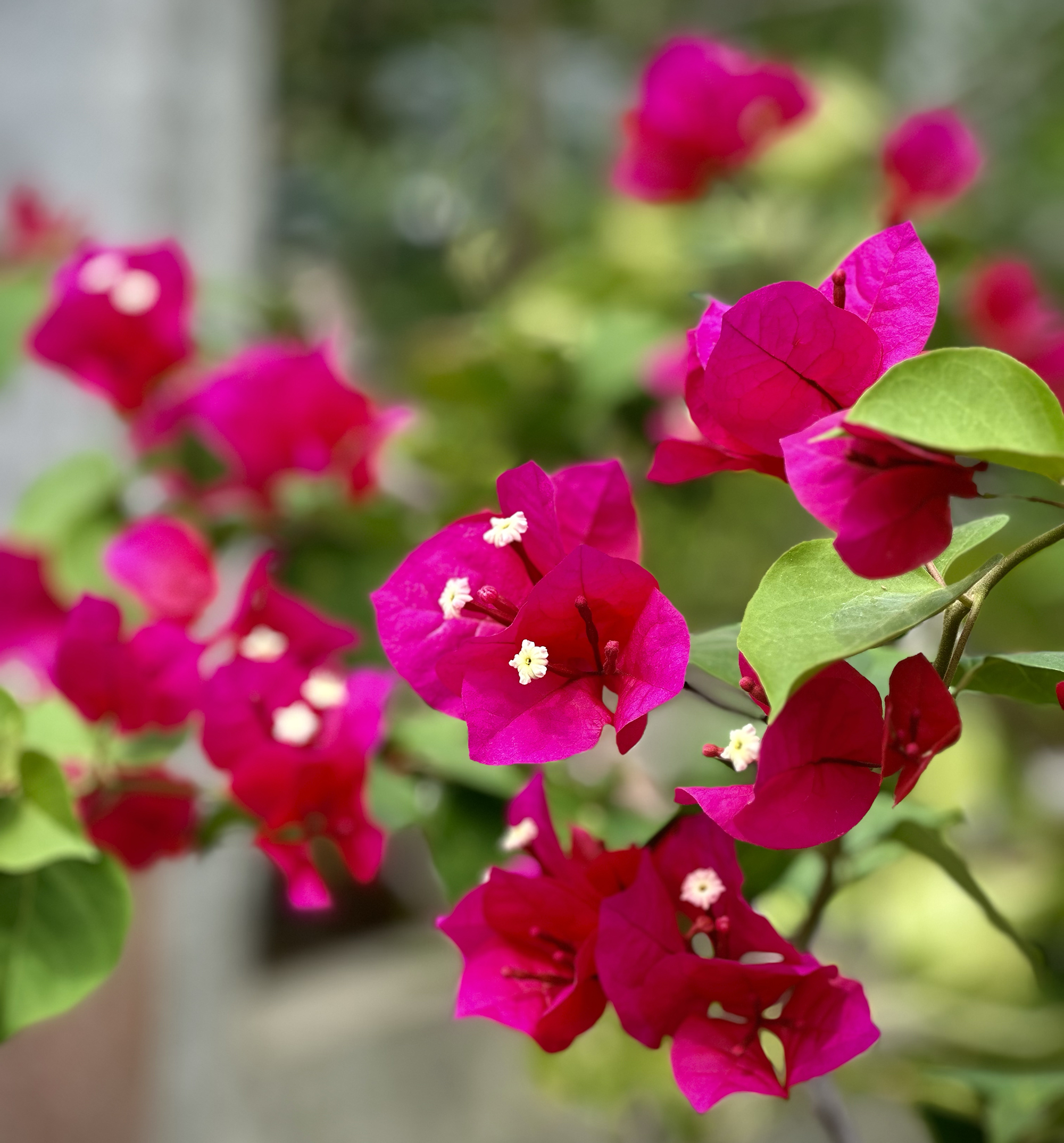
Ten years of regeneration did not just bring back trees; it brought back colour. The gardens of the estate flower through the year, in the layered, unhurried way tropical gardens do. Here are some of the plants you will find in bloom.
The climbers and the colour
Bougainvillea (Bougainvillea glabra) spills over walls in paper-bright magenta and orange. Along the fences, the purple Bengal clock vine (Thunbergia grandiflora) and the mauve of tropical wisteria (Petrea volubilis) hang in soft curtains. Hibiscus, red and yellow alike (Hibiscus rosa-sinensis), opens fresh each morning and closes by dusk.
Scent as much as sight
Some of the estate’s plants are grown for their perfume. Arabian jasmine (Jasminum sambac) and ylang-ylang (Cananga odorata) — the flower behind so many perfumes — carry on the evening air. Yellow plumeria (Plumeria rubra), the classic frangipani, adds its sweetness near the veranda.
The flowering trees
Above the beds, the trees put on the biggest show. The golden shower (Cassia fistula) drops chains of yellow; the flame-red Indian coral tree (Erythrina variegata) and the pink cortez (Tabebuia rosea) flower on bare branches, a Guanacaste signature at the turn of the seasons. Heliconia (Heliconia psittacorum) and the exotic Hong Kong orchid tree (Bauhinia blakeana) fill in between.
Why it matters
A flowering garden is more than decoration. It feeds the pollinators and the birds, marks the seasons, and softens the line between house and wild. On a regenerated estate, the flowers are a sign the whole system is working — soil, water, insects, and all.
The short version: the estate’s regenerated gardens hold a wide range of tropical flowers — bougainvillea, hibiscus, jasmine, plumeria, heliconia, and flowering trees like the golden shower and pink cortez — colour and scent through the year. To walk them, arrange a private viewing.
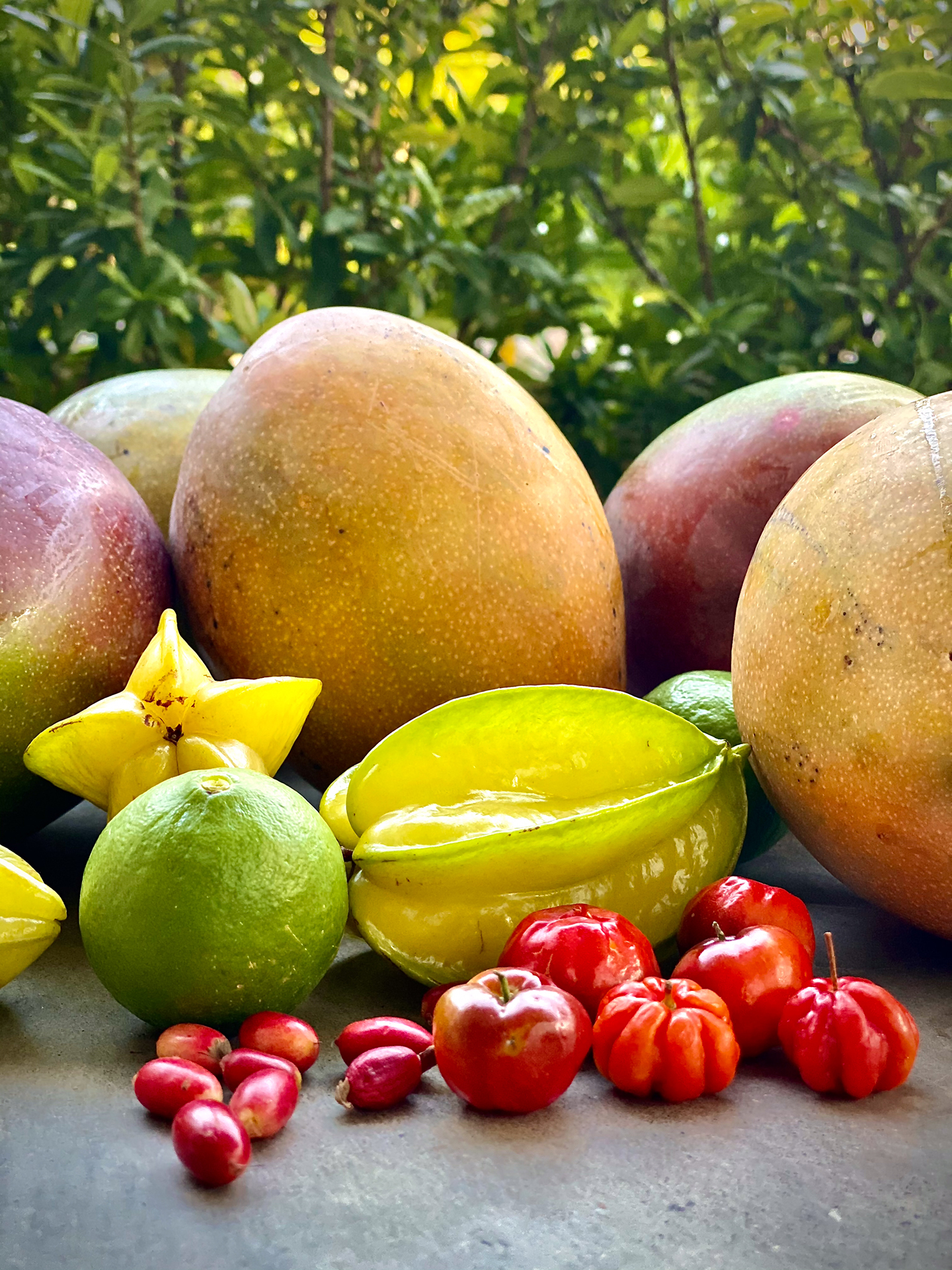
The orchard: a food forest of a hundred fruits in Nosara
Rambutan, cacao, coffee, soursop, star fruit and more — inside the estate's regenerated orchard, a working food forest of over a hundred fruit varieties.
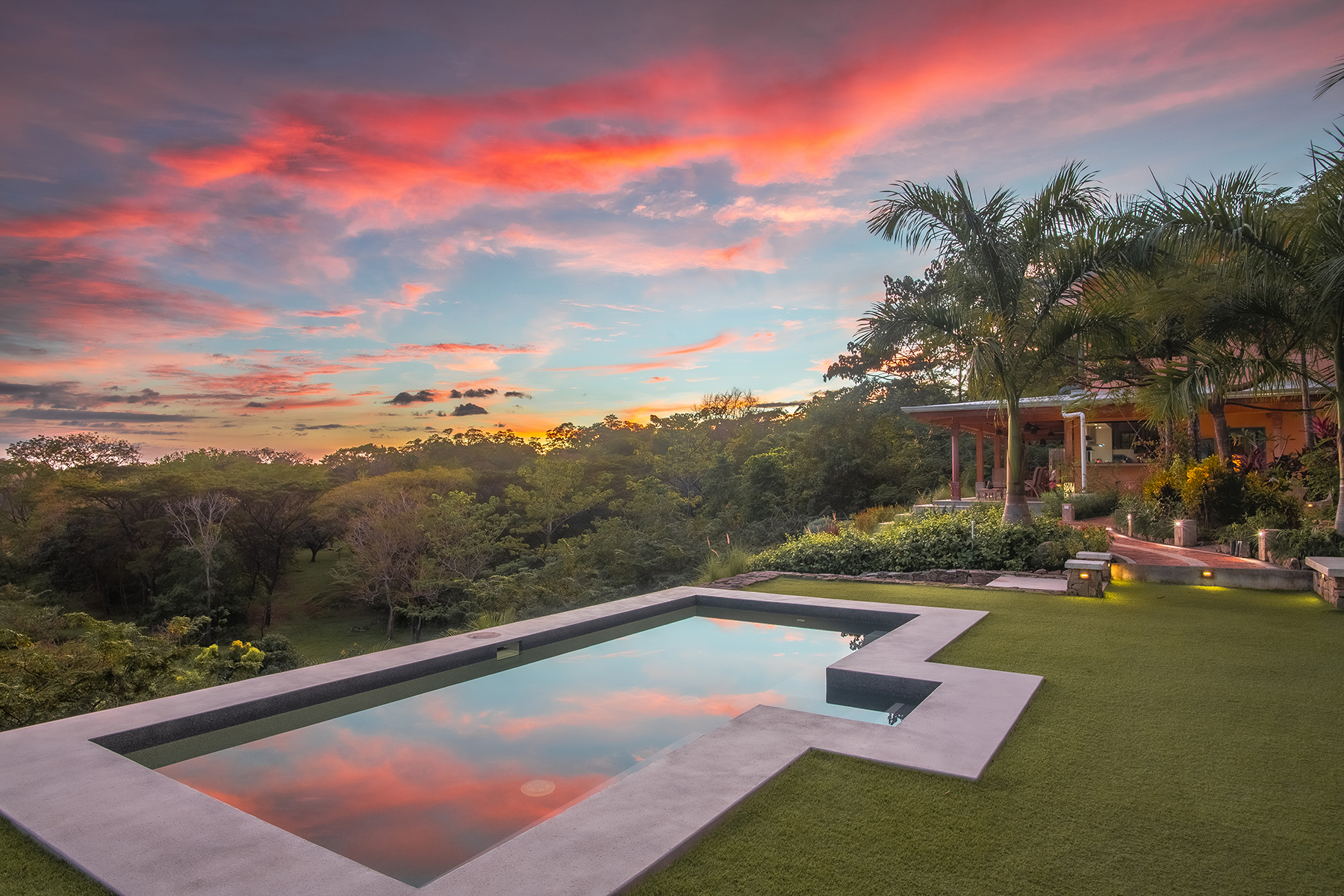
A boutique hotel in Nosara: could this estate become one?
Nosara is a global wellness and surf destination, and this titled river estate has the land, water, and power for a small, design-led hotel. Here's the case.