The birds of the Sanctuary Estate: a Nosara field guide
At first light the estate fills with birdsong, and if you sit still on the veranda you begin to name what you hear. Regenerated land draws wildlife back, and the gardens here now host a rich range of species. These are some of the birds you are most likely to see.
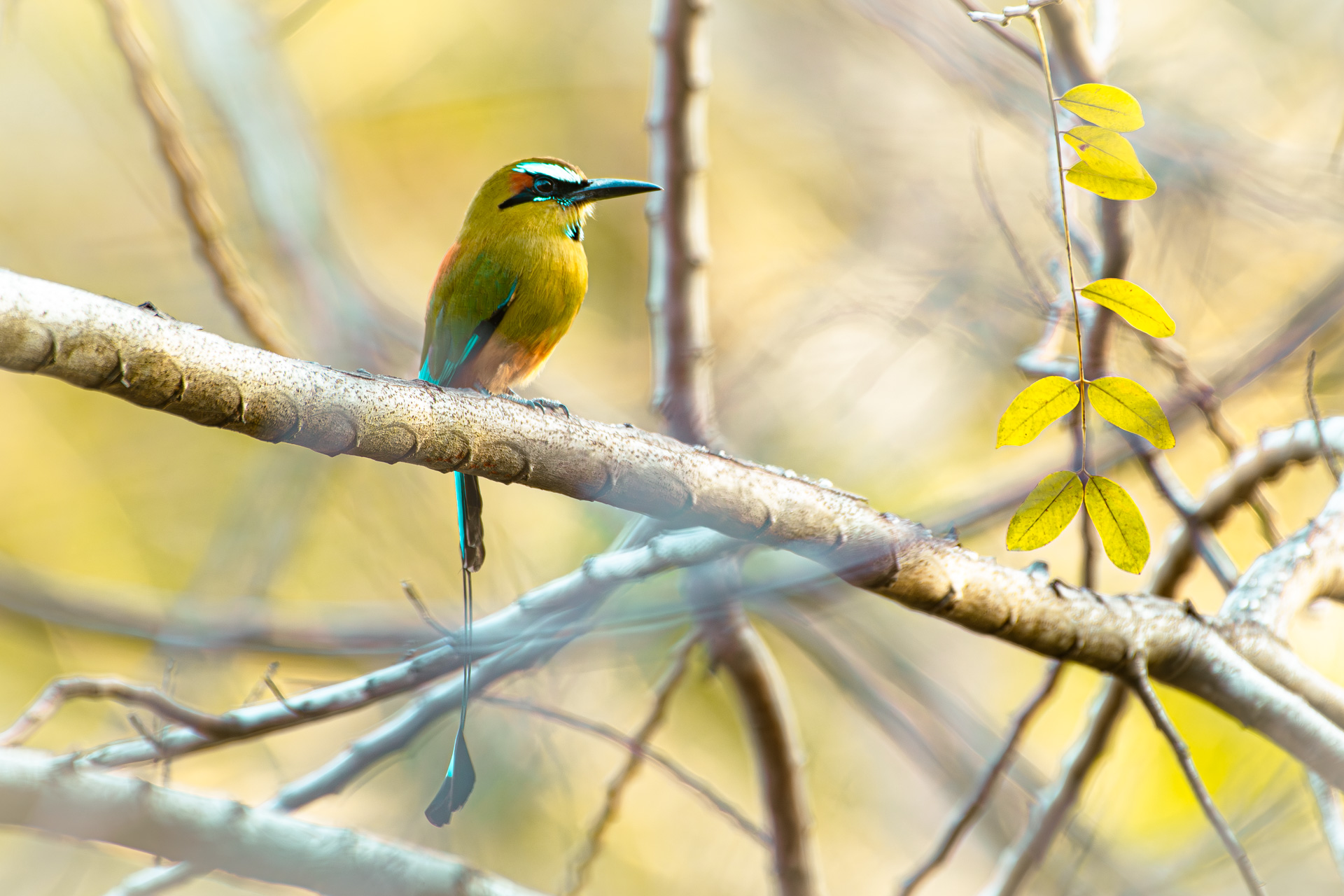
The one everyone remembers: the turquoise-browed motmot
The turquoise-browed motmot (Eumomota superciliosa) is the signature bird of Guanacaste. Jewel-green and blue, it has a long tail ending in two bare-shafted “rackets” that it swings beneath a branch like a slow pendulum. It favours the dry-forest edge, exactly the habitat the estate’s regeneration has rebuilt.
Colour in the canopy: trogons and amazons
The gartered trogon (Trogon caligatus) sits quiet and upright, a soft flash of yellow against the green. Overhead you may catch white-fronted amazons (Amazona albifrons) moving in noisy, fast-flying groups, drawn to the fruiting trees of the orchard.
The regulars: kiskadees, woodpeckers, anis
Some birds you will see every day. The great kiskadee (Pitangus sulphuratus) all but announces itself by name. Hoffmann’s woodpecker (Melanerpes hoffmannii), a bird of this corner of Central America, works the trunks. Groove-billed anis (Crotophaga sulcirostris) travel through the low brush in loose, glossy-black gangs.
Down by the water
Where the land meets the Nosara River, and at the seasonal pond on the adjoining parcel, black-bellied whistling ducks (Dendrocygna autumnalis) gather in noisy flocks, and muscovy ducks (Cairina moschata) pick along the banks. Above them, a common black hawk (Buteogallus anthracinus) or a turkey vulture (Cathartes aura) rides the morning thermals.
Why so many birds?
Birds are a fair measure of a landscape’s health, and their numbers here are no accident. A decade of regeneration turned tired pasture into fruiting trees, water, and cover: nine thousand trees and plants, an orchard, gardens, and river frontage. Build the habitat and the wild returns. For a home, a retreat, or simply a quiet morning, that chorus is part of what you would be buying.
A few to look for
- Turquoise-browed motmot (Eumomota superciliosa)
- Gartered trogon (Trogon caligatus)
- White-fronted amazon (Amazona albifrons)
- Great kiskadee (Pitangus sulphuratus)
- Hoffmann’s woodpecker (Melanerpes hoffmannii)
- Black-bellied whistling duck (Dendrocygna autumnalis)
The short version: the estate’s regenerated gardens draw a rich range of Guanacaste birds — motmots, trogons, amazons, kiskadees, woodpeckers, and waterbirds along the Nosara River — a living sign of land brought back to health. To hear it for yourself, arrange a private viewing.
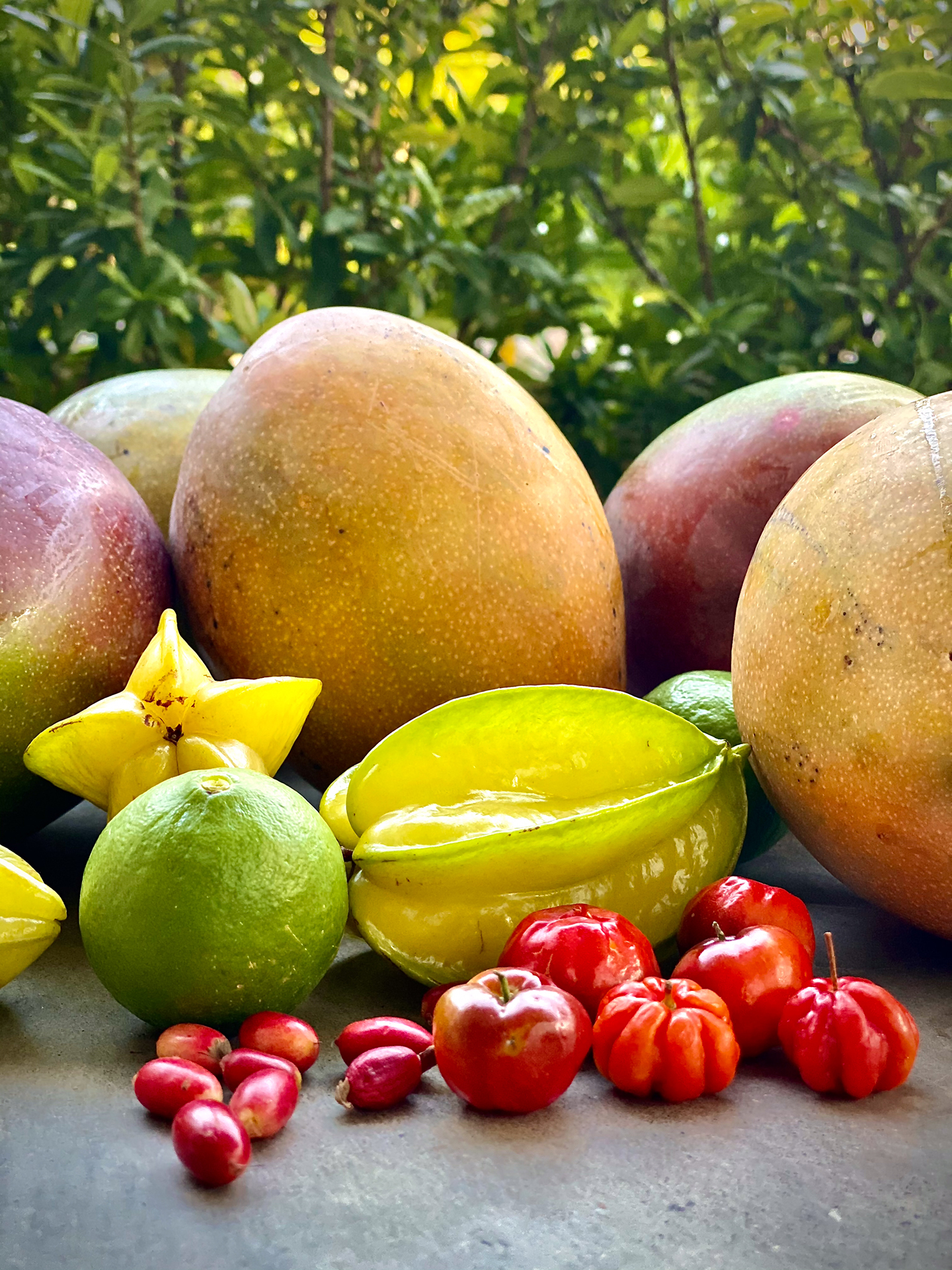
The orchard: a food forest of a hundred fruits in Nosara
Rambutan, cacao, coffee, soursop, star fruit and more — inside the estate's regenerated orchard, a working food forest of over a hundred fruit varieties.
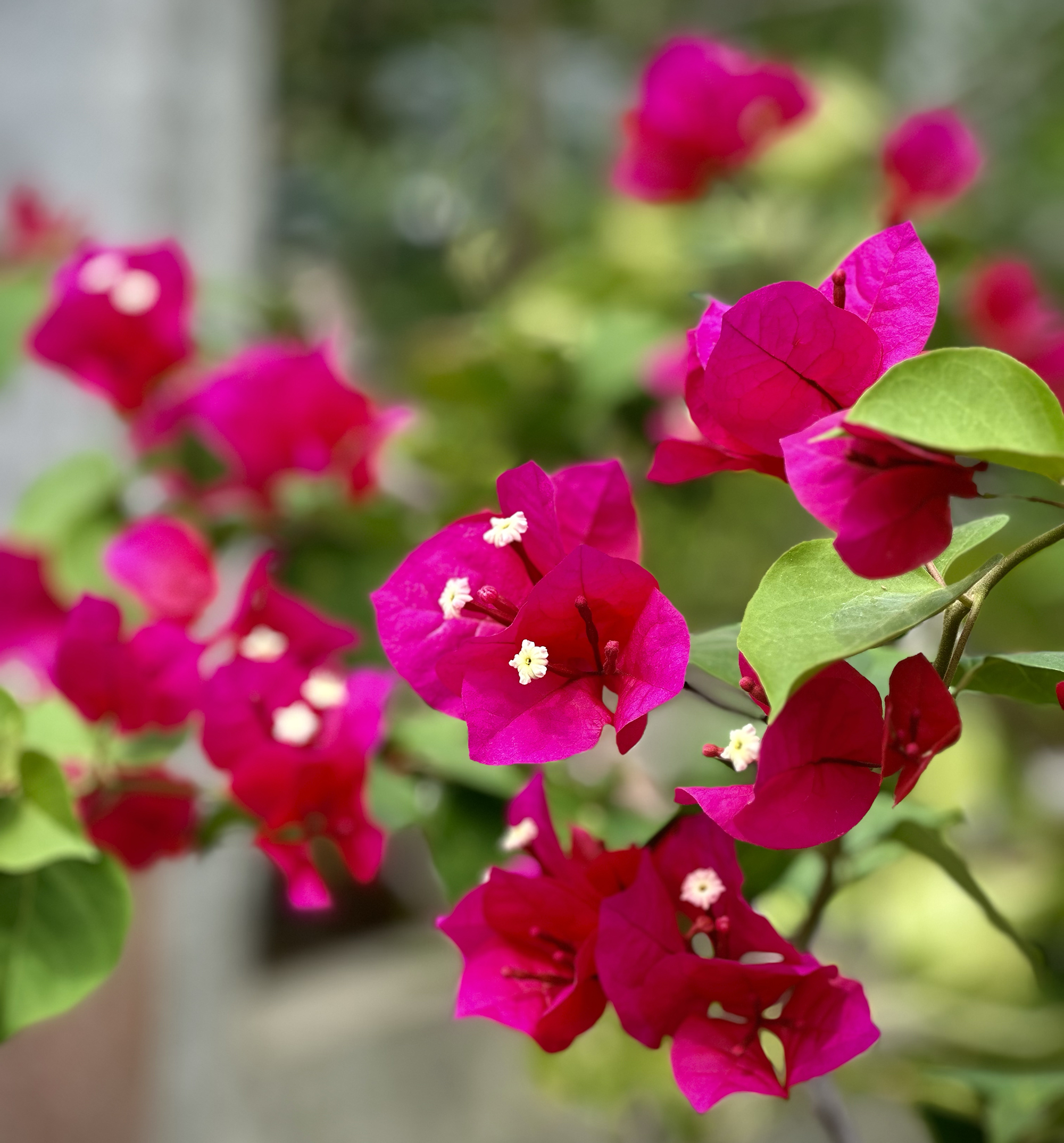
The flowering gardens of the Sanctuary Estate
Bougainvillea, plumeria, heliconia, and the flame of a coral tree — a walk through the tropical flowers that colour the estate's regenerated gardens in Nosara.