Rambutan: the jewel of the Nosara orchard
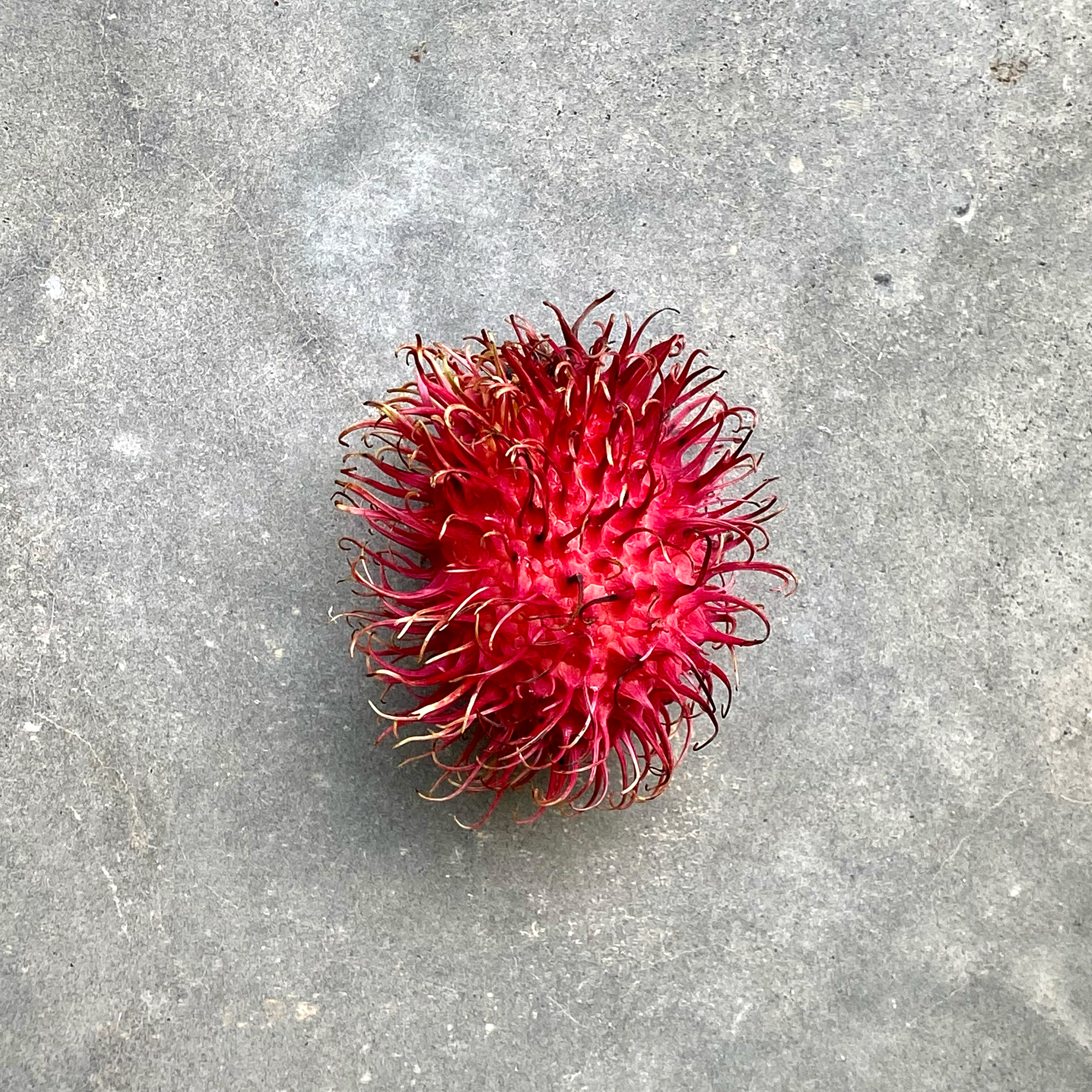
Walk the orchard in the wet season and you will find them: clusters of crimson fruit the size of a small egg, wrapped in soft, curling spines. This is rambutan, and it fruits here on the banks of the Nosara River, a long way from where it began.
Rambutan (Nephelium lappaceum) is a sweet tropical fruit, a close cousin of the lychee, and it thrives in Nosara because Guanacaste gives it exactly what it needs: steady lowland warmth, a real wet season, and deep soil with water close to the roots. Here is where it comes from, why this coast suits it, and what it tells you about the estate it grows on.
What is rambutan, and where does it come from?
Rambutan belongs to the soapberry family, Sapindaceae, which makes it a close relative of the lychee and the longan. The name comes from the Malay word rambut, meaning “hair,” for the soft spines that cover the shell. It is native to the Malay Archipelago of Southeast Asia, cultivated there for centuries, and over the last hundred years it has spread across the tropics to Central America.
In Costa Rica you will hear it called mamón chino, the “Chinese mamón,” after the native fruit it resembles. Along the Nicoya Peninsula it has become a beloved roadside crop, sold by the bagful at the height of the season.
Why does rambutan grow so well in Nosara?
Rambutan wants three things, and Nosara offers all of them. It wants warmth without frost, which Guanacaste’s lowland climate gives year-round. It wants a true wet season to fruit and a dry season to rest, which the region’s sharply divided calendar provides. And it wants deep, well-draining soil with water within reach of the roots, exactly the condition on a river terrace.
That last point is the quiet thread running through the whole estate. A decade of regeneration turned tired pasture into living soil, and the river along the southern boundary keeps the water table close. What is good for rambutan is good for a hundred other species besides.
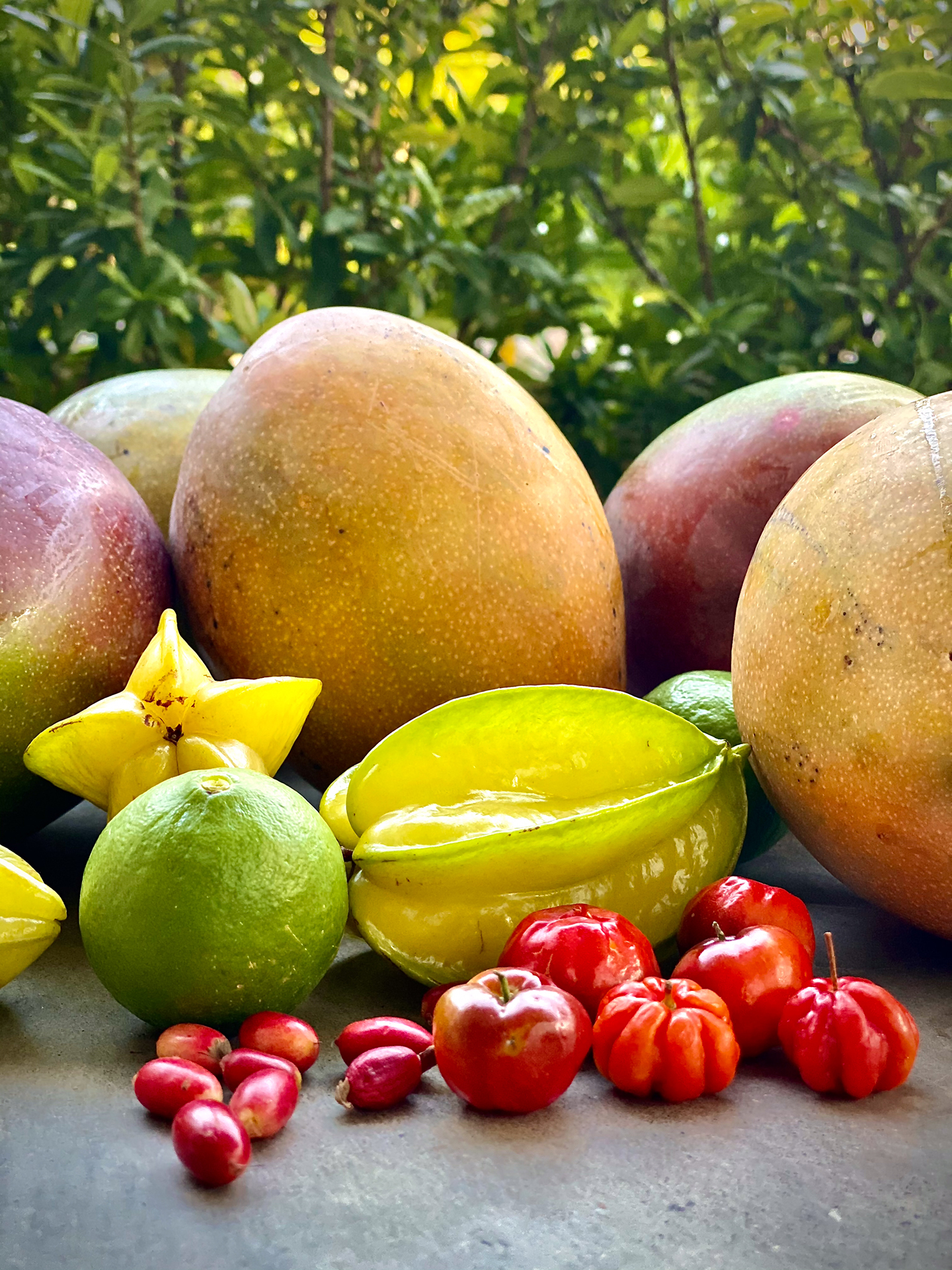
What is good for rambutan is good for the whole orchard, a sign of land brought back to life.
What does rambutan taste like?
The flesh is sweet and faintly floral, somewhere between a grape and a lychee, with a clean acidity that keeps it from cloying. To open one, score the skin around its middle and twist; the two halves part and the fruit slips free. Eat it fresh and cold, mind the seed at the centre, and you have the simplest pleasure the orchard offers.
At a glance
- Common name: rambutan, mamón chino
- Botanical: Nephelium lappaceum, family Sapindaceae
- Origin: Malay Archipelago, Southeast Asia
- Season here: roughly August to October, with the rains
- On the estate: one of 100+ fruit varieties across 50 species
A fruit is a small thing. It is also a piece of evidence: proof that this land can carry the rare and the tropical, that the water and the soil and the seasons line up. The orchard was not an accident. It was planted by hand over ten years, and the rambutan is one of its quieter rewards.
The orchard: a food forest of a hundred fruits in Nosara
Rambutan, cacao, coffee, soursop, star fruit and more — inside the estate's regenerated orchard, a working food forest of over a hundred fruit varieties.
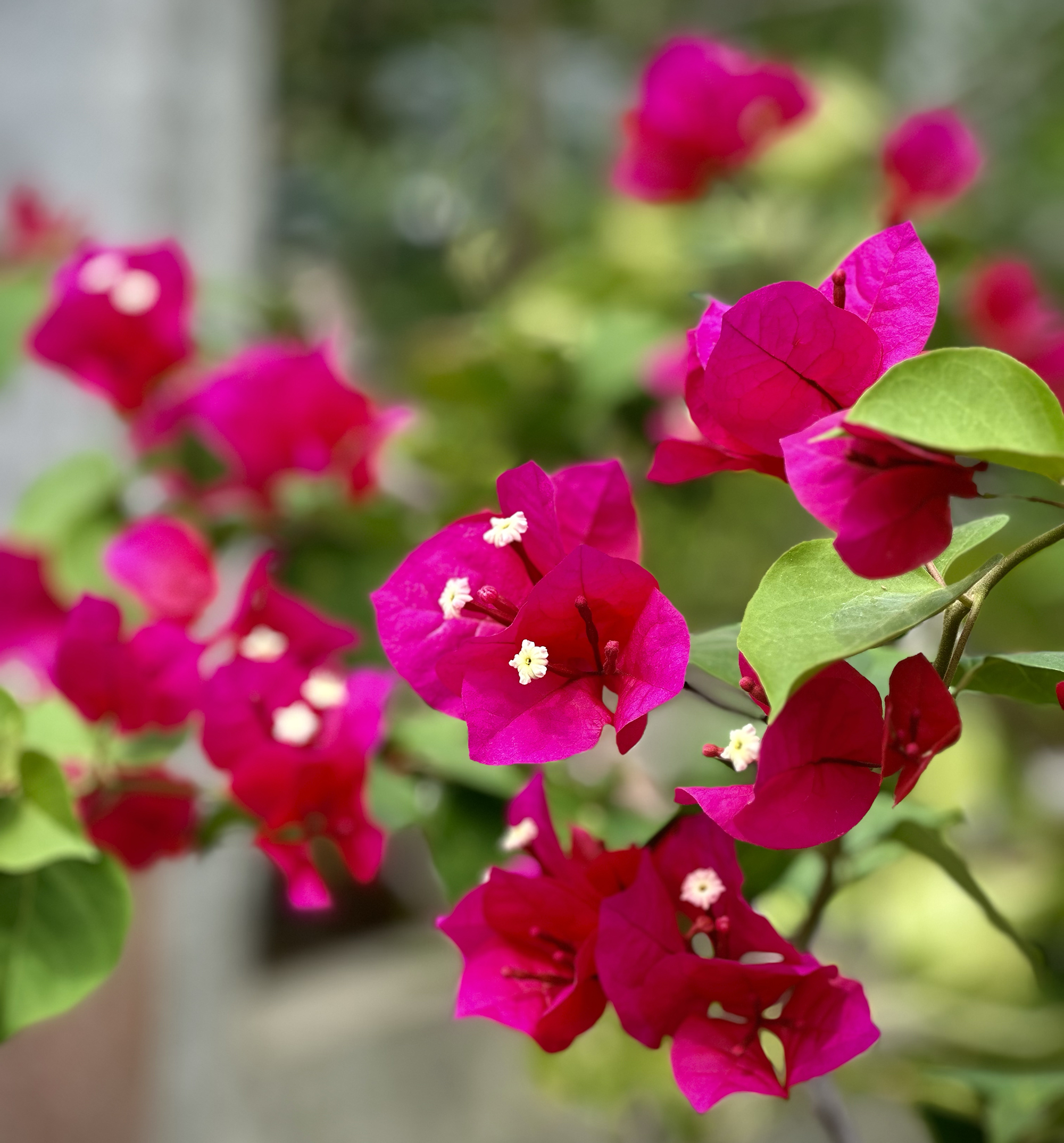
The flowering gardens of the Sanctuary Estate
Bougainvillea, plumeria, heliconia, and the flame of a coral tree — a walk through the tropical flowers that colour the estate's regenerated gardens in Nosara.